Finding hope starts with taking the first step.
Compassionate, evidence-based psychiatric care for depression — personalized to who you are, not just what you're experiencing.
Depression is more than simply feeling sad. It can affect your energy, motivation, relationships, work, sleep, concentration, and even your physical health. Some people experience overwhelming sadness, while others describe feeling emotionally numb, disconnected, exhausted, or as though they are simply "going through the motions."
At Jauregui Psychiatry, we understand that depression looks different for every individual. Rather than focusing only on symptoms, we strive to understand the experiences, stressors, medical history, lifestyle factors, and personal goals that make your situation unique — with the goal of helping you move beyond symptom management toward lasting emotional wellness.
What is depression?
Depression is a common but serious medical condition that affects how a person thinks, feels, and functions. It is not a sign of weakness or something that can simply be overcome through willpower.
Depression can affect every aspect of daily life, including relationships, work performance, school, physical health, sleep, motivation, and the ability to enjoy activities that once brought happiness.
Many people delay seeking care because they believe they should "handle it themselves." In reality, depression is a highly treatable condition, and many individuals experience significant improvement with evidence-based treatment and ongoing support.
Common symptoms of depression.
Depression can affect emotional, physical, cognitive, and behavioral functioning.
- Persistent sadness
- Feeling empty or emotionally numb
- Hopelessness
- Irritability
- Frequent crying
- Loss of enjoyment in activities
- Feeling overwhelmed
- Fatigue and low energy
- Changes in appetite or weight
- Sleeping too much or too little
- Slowed movement
- Physical aches without a clear cause
- Difficulty concentrating
- Brain fog
- Negative thinking
- Excessive guilt
- Poor memory
- Indecisiveness
- Feeling like a burden
- Social withdrawal
- Reduced productivity
- Difficulty completing daily tasks
- Loss of motivation
- Neglecting hobbies
- Decreased self-care
Types of depression we evaluate.
Depression is not a single condition, and understanding the specific pattern of symptoms is an important part of treatment planning.
Depression is not always what it seems.
Many conditions can produce symptoms that resemble depression or occur alongside it — including anxiety disorders, ADHD, bipolar disorder, PTSD, sleep disorders, thyroid disease, vitamin deficiencies, hormonal changes, chronic medical illnesses, medication side effects, and substance use.
Rather than assuming every episode of low mood is depression, we believe effective treatment begins with understanding the underlying factors contributing to your symptoms — so recommendations are personalized, evidence-based, and aligned with your specific needs.

Meaningful psychiatric care begins with listening.
Every person brings a unique life story, set of experiences, strengths, and challenges. Depression affects far more than mood alone — it can influence relationships, work, education, sleep, physical health, confidence, and overall quality of life.
During your evaluation, we take time to understand not only your symptoms but the broader context of your life — your goals, previous treatment experiences, stressors, medical history, lifestyle habits, and personal priorities. Rather than rushing to a diagnosis, our goal is to partner with you in developing a plan that reflects both the best available medical evidence and your individual preferences.
What to expect during your evaluation.
Your initial psychiatric evaluation typically lasts approximately 60 minutes. Together, we may discuss your current symptoms and when they began, previous episodes, medical and family history, sleep, energy levels, stressors, lifestyle habits, current medications, previous psychiatric treatment, personal treatment goals, and any questions you may have.
Following your evaluation, we'll review our clinical impressions together and discuss treatment options tailored to your individual circumstances.
Evidence-based depression treatment.
Every treatment plan is personalized. Depending on your symptoms, diagnosis, medical history, and goals, treatment recommendations may include:
- Medication management when appropriate
- Psychotherapy recommendations
- Education about depression
- Lifestyle interventions
- Sleep optimization
- Stress management
- Regular follow-up care
- Collaboration with therapists and other healthcare professionals
Our goal extends beyond improving symptoms — we strive to help patients regain energy, improve daily functioning, strengthen relationships, and reconnect with activities that bring meaning and purpose.
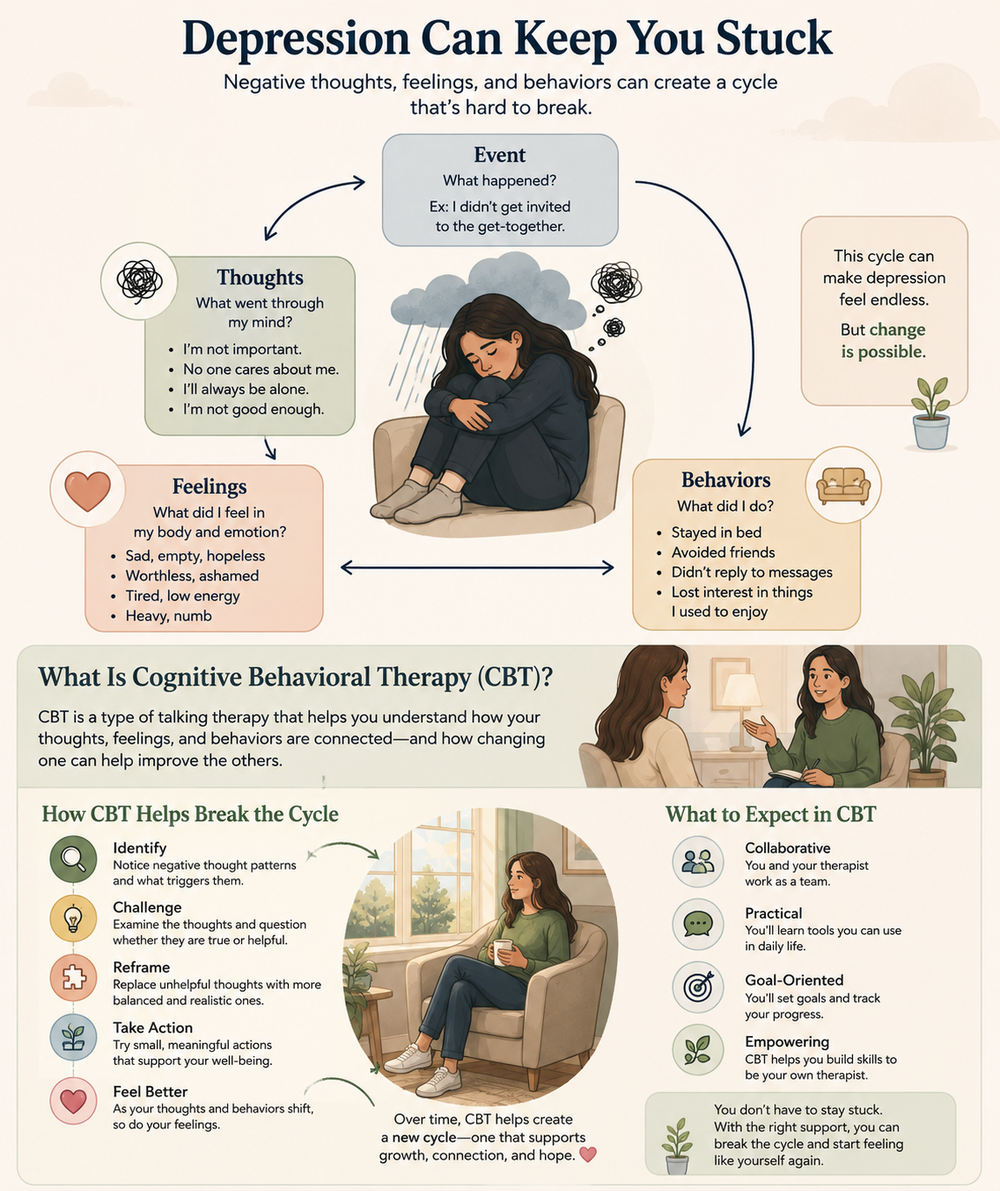
Understanding the depression cycle.
Negative thoughts, feelings, and behaviors can reinforce one another, creating a cycle that feels hard to break. Cognitive Behavioral Therapy (CBT) is one of the most well-studied approaches for helping interrupt that cycle.
Mental health is influenced by many interconnected aspects of health. When appropriate, we discuss evidence-informed lifestyle strategies that may complement traditional psychiatric treatment — sleep optimization, regular physical activity, balanced nutrition, stress reduction, healthy routines, mindfulness practices, social connection, and reducing alcohol and substance use.
These strategies are not intended to replace medication or psychotherapy when those treatments are appropriate. Instead, they may serve as valuable components of a comprehensive treatment plan. Learn more about our lifestyle-informed approach →
What our evaluations emphasize.
- Feeling heard and respected
- Comprehensive evaluations
- Personalized treatment plans
- Collaborative decision-making
- Clear explanations
- Evidence-based recommendations
- Lifestyle-informed care
- Convenient telehealth appointments
- Bilingual psychiatric services in English & Spanish
Questions about depression treatment.
How do I know if I have depression?
Will I need medication?
Can depression cause physical symptoms?
What happens during my first appointment?
Do you offer telehealth?
Recovery is possible.
Depression can make it difficult to believe things will improve — but whether you've recently begun struggling with symptoms or have been living with depression for years, you don't have to face it alone.
Our goal is to provide compassionate, individualized, evidence-based psychiatric care that helps you better understand your symptoms, regain hope, and move toward meaningful, lasting improvements in your mental health and overall quality of life.