Anxiety can feel overwhelming — you don't have to face it alone.
Comprehensive, evidence-based anxiety treatment in Texas, built around the whole person — not just the symptoms.
Anxiety can affect nearly every aspect of life, from work and relationships to sleep, concentration, and physical health. For some, it feels like constant worry that never quiets down. For others, it appears as panic attacks, racing thoughts, restlessness, or physical symptoms such as chest tightness, muscle tension, a rapid heartbeat, or gastrointestinal discomfort.
At Jauregui Psychiatry, we recognize that no two people experience anxiety in exactly the same way. Rather than simply treating symptoms, our goal is to understand the whole person behind them — through comprehensive psychiatric evaluations, collaborative treatment planning, and evidence-based care.
What is anxiety?
Anxiety is a normal human response that helps us recognize potential danger and prepare for stressful situations. However, when anxiety becomes excessive, persistent, or begins interfering with work, school, relationships, sleep, or daily activities, it may represent an anxiety disorder that deserves further evaluation.
Many people with anxiety describe feeling as though their minds are constantly "on," making it difficult to relax, concentrate, or fully enjoy everyday life. Others experience physical symptoms that may initially seem unrelated to mental health, including headaches, fatigue, muscle tension, a rapid heartbeat, dizziness, stomach discomfort, or shortness of breath.
The encouraging news: anxiety disorders are among the most treatable mental health conditions, and effective, evidence-based treatments are available.
Why does anxiety happen?
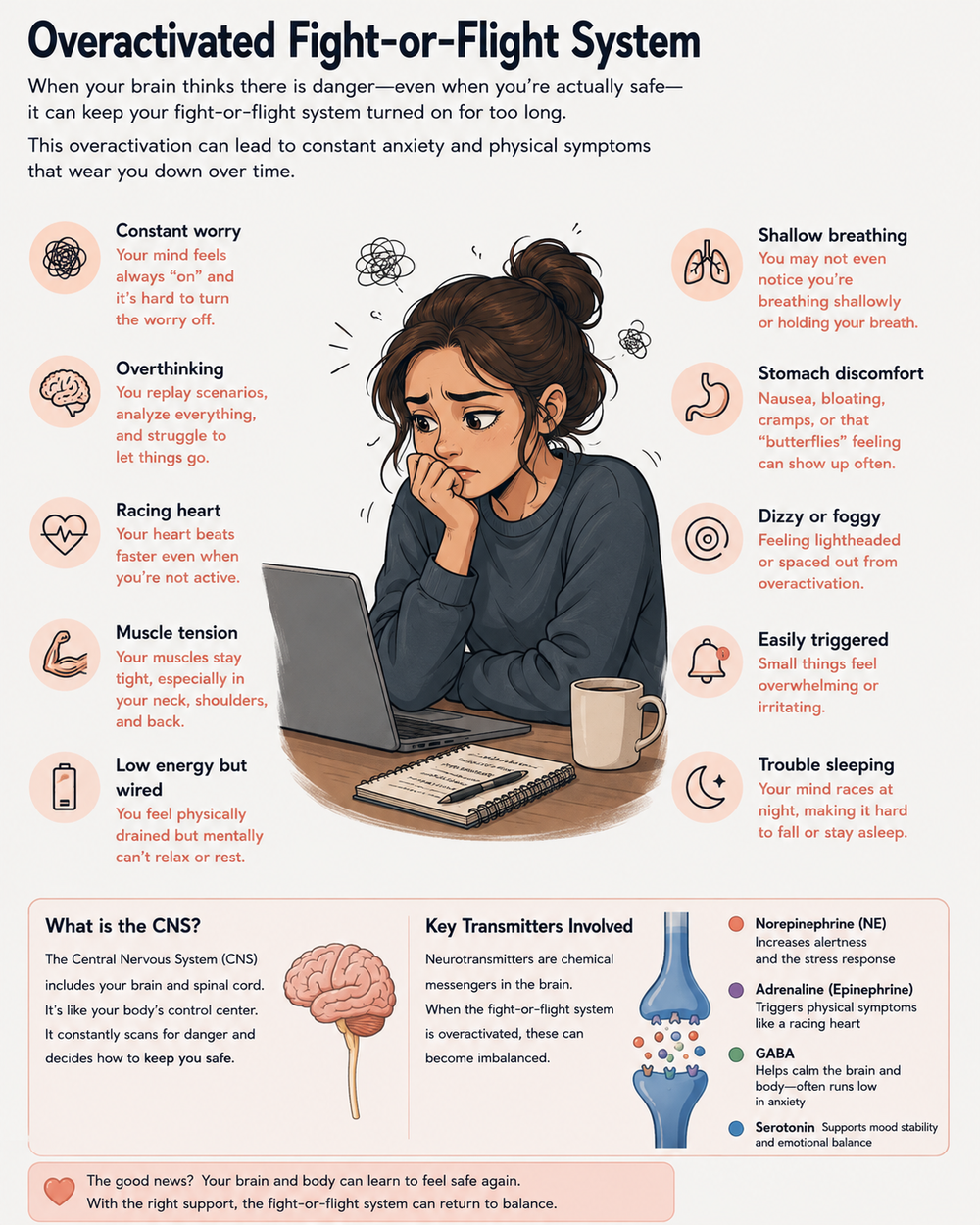
Anxiety often reflects an overactivated fight-or-flight system — the brain's alarm system staying "on" even when there's no real danger present, which can produce the constant worry, racing heart, muscle tension, and other symptoms many patients describe.
A free tool you can use right now
Grounding techniques can help interrupt this cycle in the moment by bringing your attention back to the present. This menu offers a range of simple, practical techniques to try.
Free Downloadable Grounding Techniques For Anxiety →
Common symptoms of anxiety.
Symptoms vary from person to person, and anxiety commonly affects emotional, cognitive, behavioral, and physical functioning.
- Excessive worry
- Feeling overwhelmed
- Irritability
- Feeling constantly on edge
- Fear that something bad may happen
- Difficulty relaxing
- Muscle tension
- Rapid heartbeat
- Chest tightness
- Sweating and trembling
- Upset stomach or nausea
- Headaches, fatigue, sleep disturbance
- Racing thoughts
- Difficulty concentrating
- Overthinking
- Catastrophic thinking
- Constant "what if" thoughts
- Indecisiveness
- Avoiding stressful situations
- Reassurance seeking
- Social withdrawal
- Difficulty completing tasks
- Restlessness
- Procrastination due to worry
Types of anxiety disorders we evaluate.
Each condition has unique features, and careful evaluation helps determine the most appropriate diagnosis and treatment recommendations.
Anxiety is not always "just anxiety."
One of the most important parts of psychiatric care is making the correct diagnosis. Many medical and psychiatric conditions can produce symptoms that resemble anxiety — including ADHD, depression, bipolar disorder, PTSD, thyroid disorders, sleep disorders, medication side effects, substance use, and certain medical conditions.
Because of this, effective treatment begins with a careful, comprehensive evaluation rather than assumptions based on symptoms alone — so that recommendations are individualized, evidence-based, and appropriate for your specific situation.
Meaningful psychiatric care begins with listening.
Every individual brings unique experiences, strengths, challenges, and goals to treatment. Rather than a one-size-fits-all approach, we work collaboratively to develop a treatment plan that reflects your personal circumstances and preferences.
During your evaluation, we strive to understand not only your symptoms but the factors that may be influencing them — stress, sleep, physical health, relationships, work, lifestyle habits, previous treatments, and overall quality of life. You deserve clear explanations, thoughtful recommendations, and an active role in decisions about your care.
What to expect during your evaluation.
Your initial psychiatric evaluation typically lasts approximately 60 minutes. Together, we may discuss your current symptoms and when they began, previous treatment experiences, medical history and current medications, sleep patterns, stressors, family history, lifestyle habits, occupational and educational functioning, personal goals, and any questions or concerns.
Following your evaluation, we'll review our clinical impressions together and discuss treatment options that best align with your goals.
Evidence-based anxiety treatment.
Treatment recommendations are individualized and may include one or more evidence-based approaches, depending on your diagnosis, symptoms, preferences, and overall health.
- Medication management when appropriate
- Psychotherapy recommendations
- Education regarding anxiety disorders
- Stress management techniques
- Sleep optimization
- Lifestyle modifications
- Regular follow-up visits
- Coordination with therapists or other healthcare professionals
Our goal is not simply symptom reduction — it's helping you improve daily functioning, confidence, relationships, and overall quality of life.
Mental health is influenced by many interconnected factors. When appropriate, we discuss practical lifestyle strategies that may complement traditional psychiatric treatment — sleep optimization, regular physical activity, balanced nutrition, stress management, healthy routines, mindfulness practices, and limiting excessive caffeine and alcohol.
These changes are never a replacement for evidence-based psychiatric treatment, but they can be a valuable part of a comprehensive care plan. Learn more about our lifestyle-informed approach →
What our evaluations emphasize.
- Comprehensive evaluations
- Feeling heard rather than rushed
- Individualized treatment plans
- Collaborative decision-making
- Clear explanations
- Evidence-based recommendations
- Lifestyle-informed care
- Convenient telehealth appointments
- Bilingual psychiatric services in English & Spanish
Questions about anxiety treatment.
What causes anxiety?
Will I need medication?
Can anxiety cause physical symptoms?
What happens during my first appointment?
Do you offer telehealth?
You don't have to navigate anxiety alone.
Reaching out for help can be one of the most difficult parts of the journey. Whether you've recently begun experiencing symptoms or have been struggling for years, our goal is to provide compassionate, evidence-based psychiatric care tailored to your unique needs.
Together, we'll work toward improving your symptoms, strengthening your daily functioning, and helping you move toward lasting emotional wellness.